
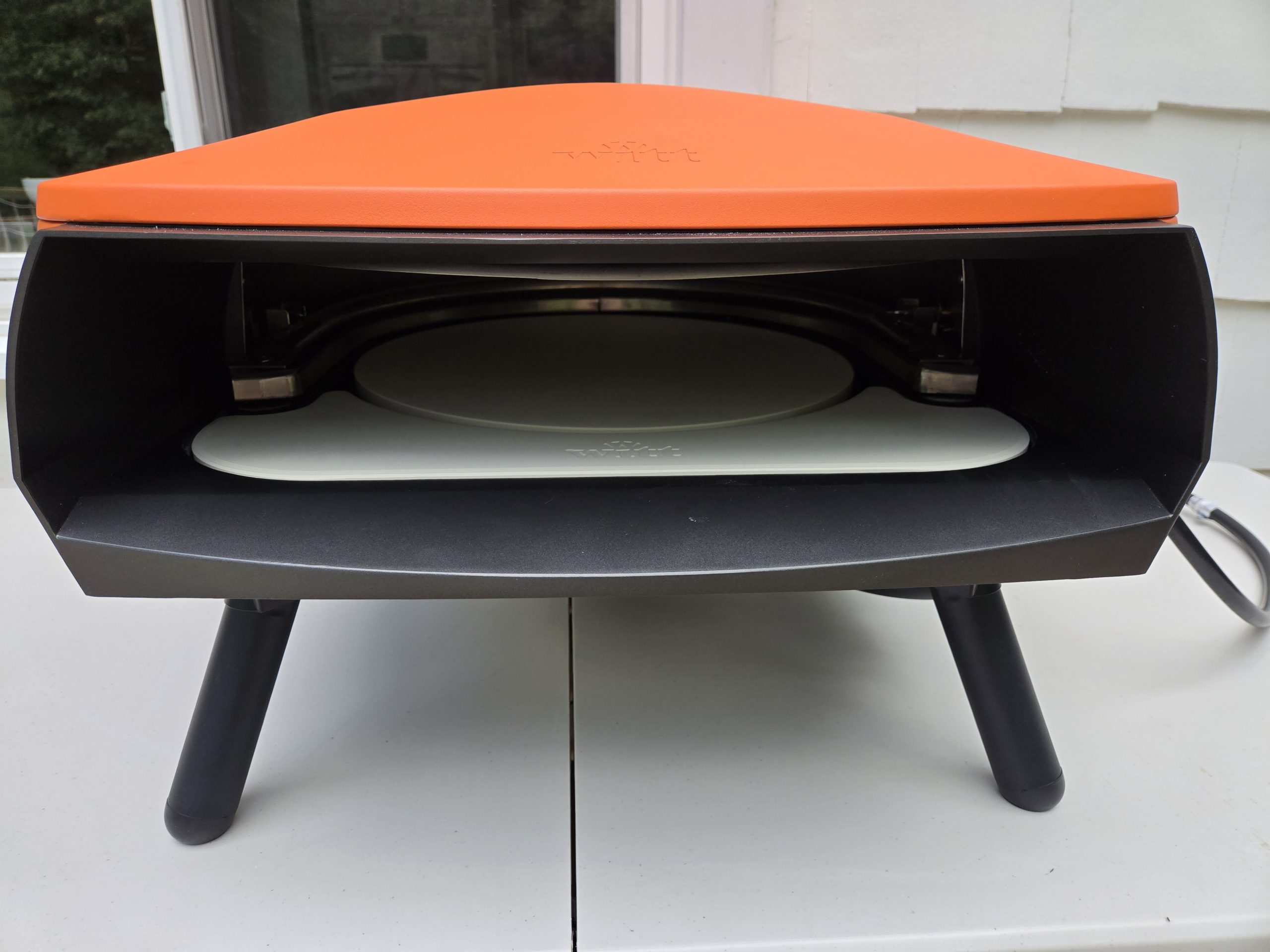
I’ve always regarded pizza ovens as a luxury more than a necessity — perhaps even veering more into showing off territory than anything practical. Certainly, it’s tough to argue that anyone actually needs an entirely separate oven just to cook one particular dish, but having now tried out the Witt Etna Rotante Pizza Oven for a few weeks, I can tell you that you’ll have to pry this beautiful thing from my warm, grease-stained hands. Here’s why.
“A Taste of Italy” by Geoff Harvey – Purple Planet Music.

Witt Etna Rotante Pizza Oven
Specifications
- Dimensions: 29.53 inches deep × 25.98 inches wide × 17.32 inches high.
- Weight: 66 pounds.
- Pizza capacity: Up to 16-inch.
- Power source: Liquid propane gas for cooking, with electric/AA-battery-powered ignition and stone rotation.
- Gas output: 31,400 BTU per burner.
- Maximum temperature: 950°F.
- Pre-heat time: Around 15 minutes to reach baking temperature.
- Cooking time: 60-90 seconds per pizza at high heat.
- Main interior material: Stainless steel.
- Colors: Black, graphite, orange, or stone/white.
- Warranty: 1 year.
- Use: Outdoor only.
- Price: $1,039.
Pros
- Rotating stone means you don’t have to turn the pizza yourself while cooking.
- Pizza cooks very quickly.
- Simple temperature controls.
- Looks great.
- Big oven opening.
Cons
- Collapsible legs don’t do much for portability, mostly making it harder to set up.
- Difficult to tell when the bottom burner is lit.
- Heavy.
- No built-in temperature gauge.
The Unboxing
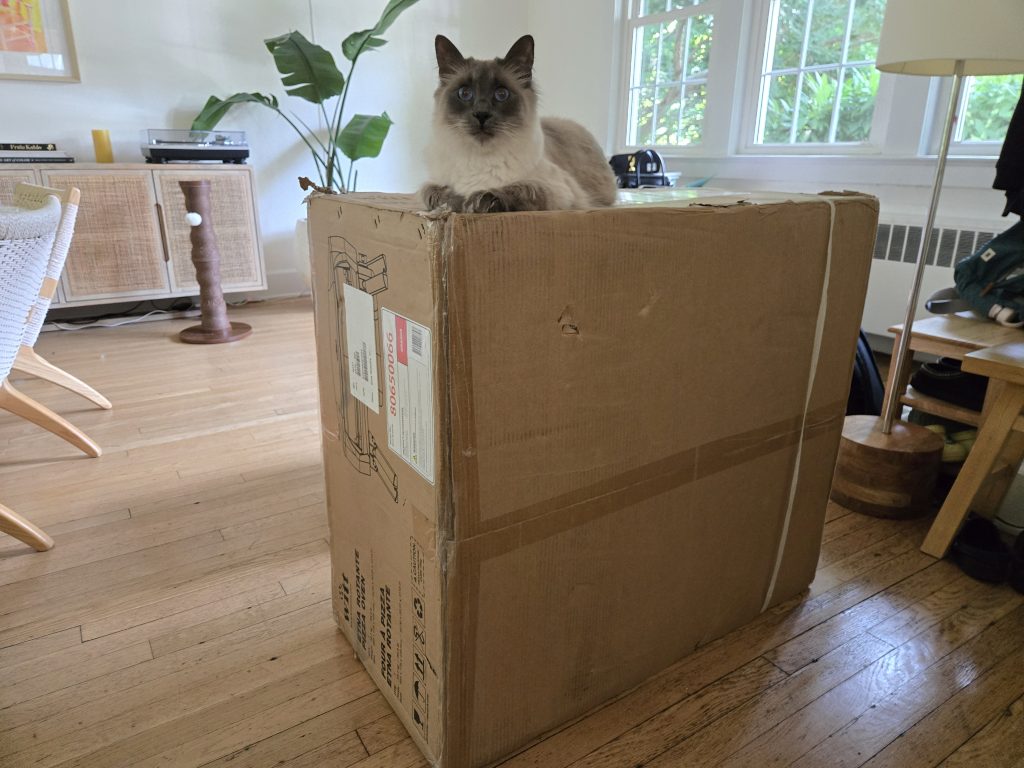
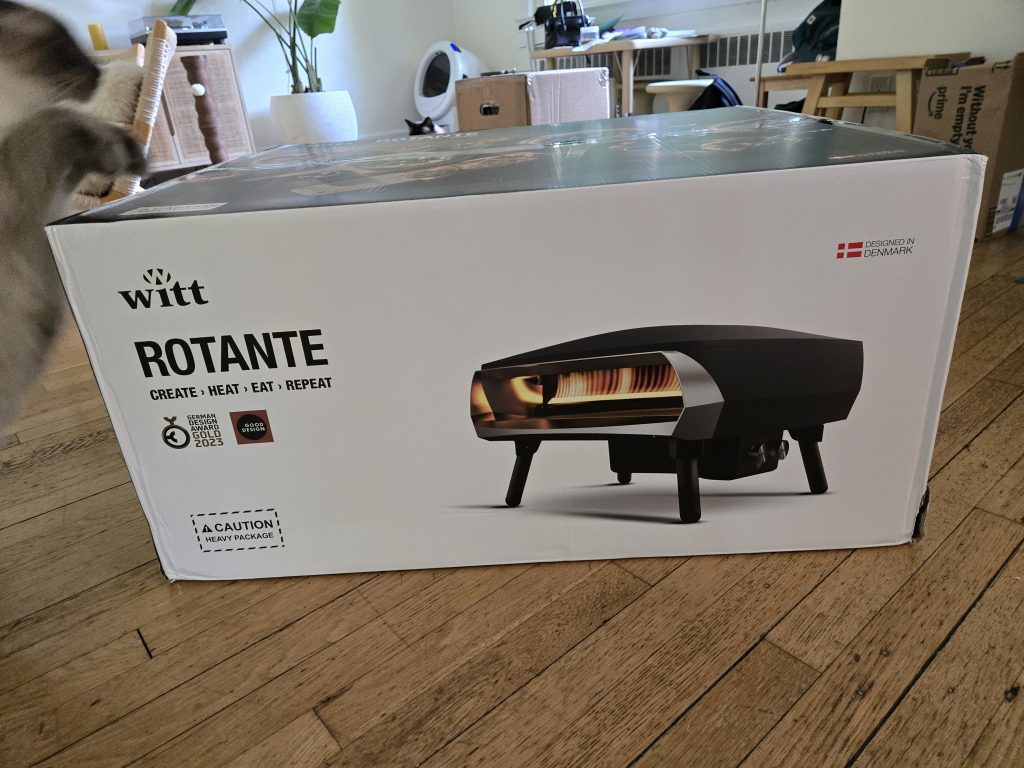
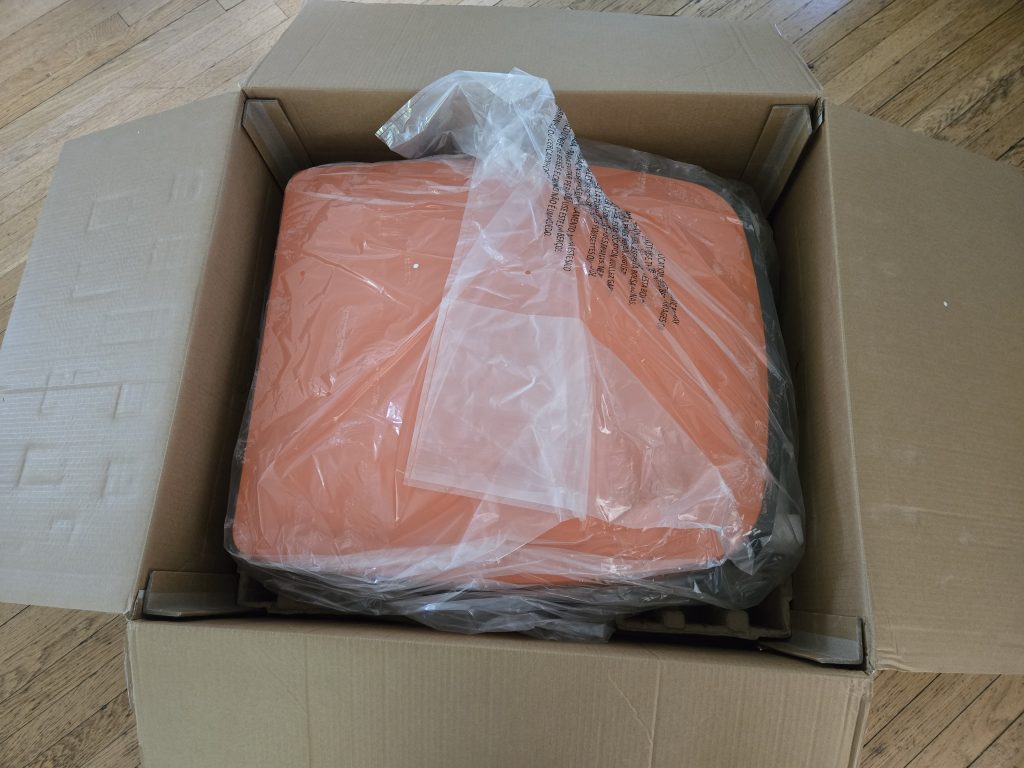
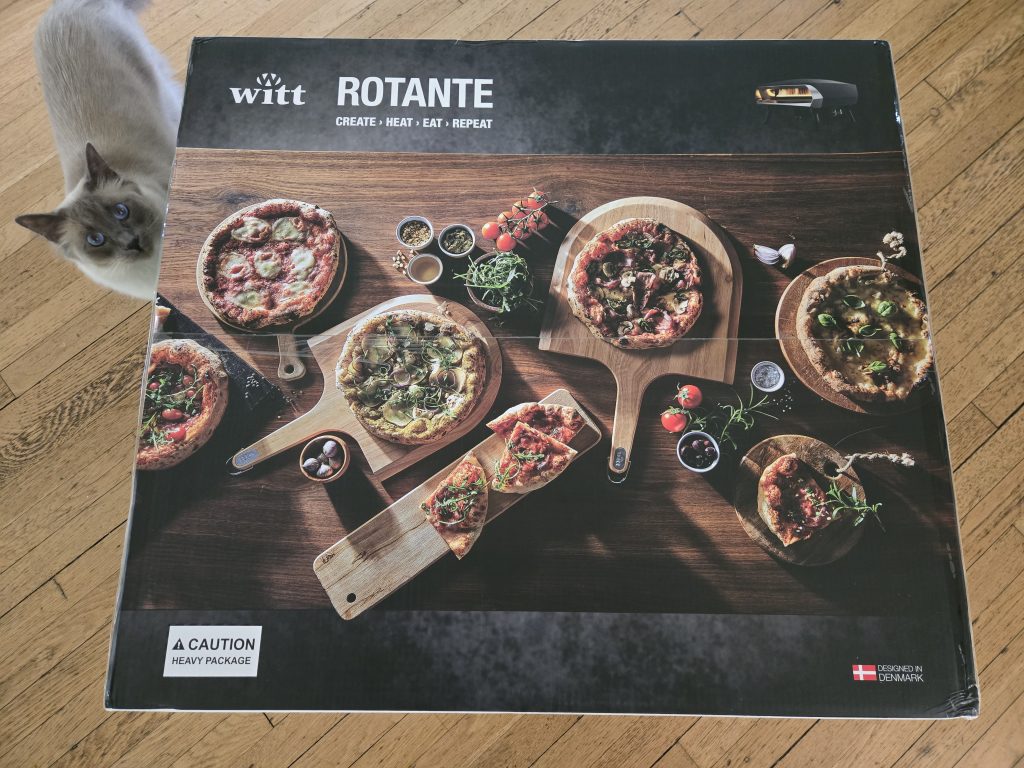
The Witt Etna Rotante Pizza Oven arrived in a huge box, as you might expect, weighing around 80 pounds. The packaging contained:
- The oven itself.
- The front stone.
- The pizza stone.
- The power cable.
- The gas regulator/hose.
- A manual.
The Design
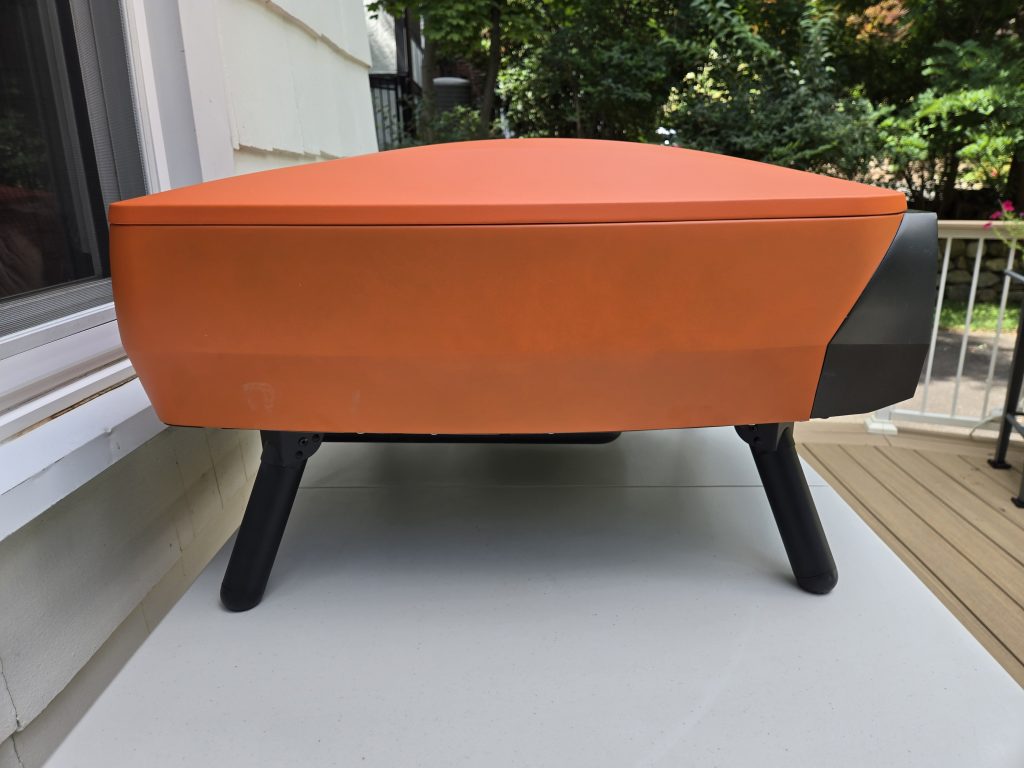
Eye-catching is an adjective thrown around a lot, but believe me, when this thing is in your back yard, people are going to notice. With its smooth lines and wide opening, it has a sort of stylish sci-fi quality to it, looking sleek but entirely functional. (Thanks to its top-heavy construction and domed top — and the fact that we already have both a RoboMop and a RoboPlop — my family has taken to calling it Bread-209).
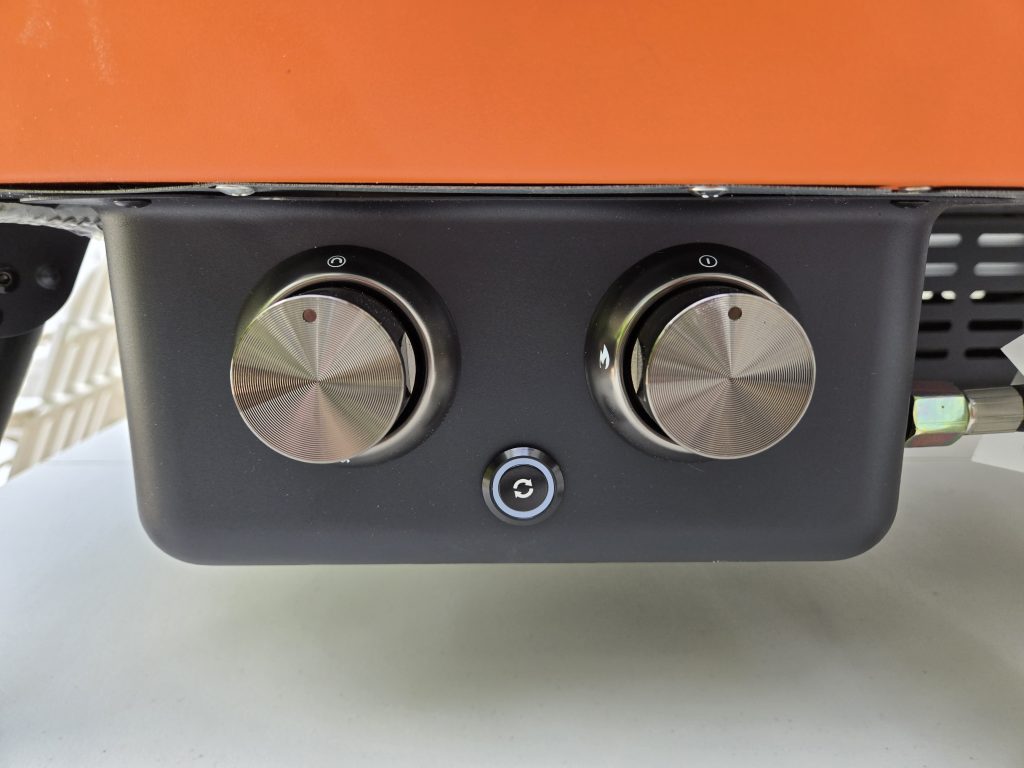
There are four available colors, three of which are pleasantly neutral, and one of which (the one my review sample came in), is a delightfully “LOOK AT ME!!” shade of orange, which should be hideous, but somehow looks just right in context. The controls on the side are tastefully minimal, giving you control over the pizza stone rotation and the two burners — the U-burner (the large, horseshoe-shaped burner that runs round the interior and cooks the sides of the pizza) and the booster burner (which cooks the middle of the pizza). The whole thing gives the impression of having been designed with immense care and attention to detail.
The Set-Up
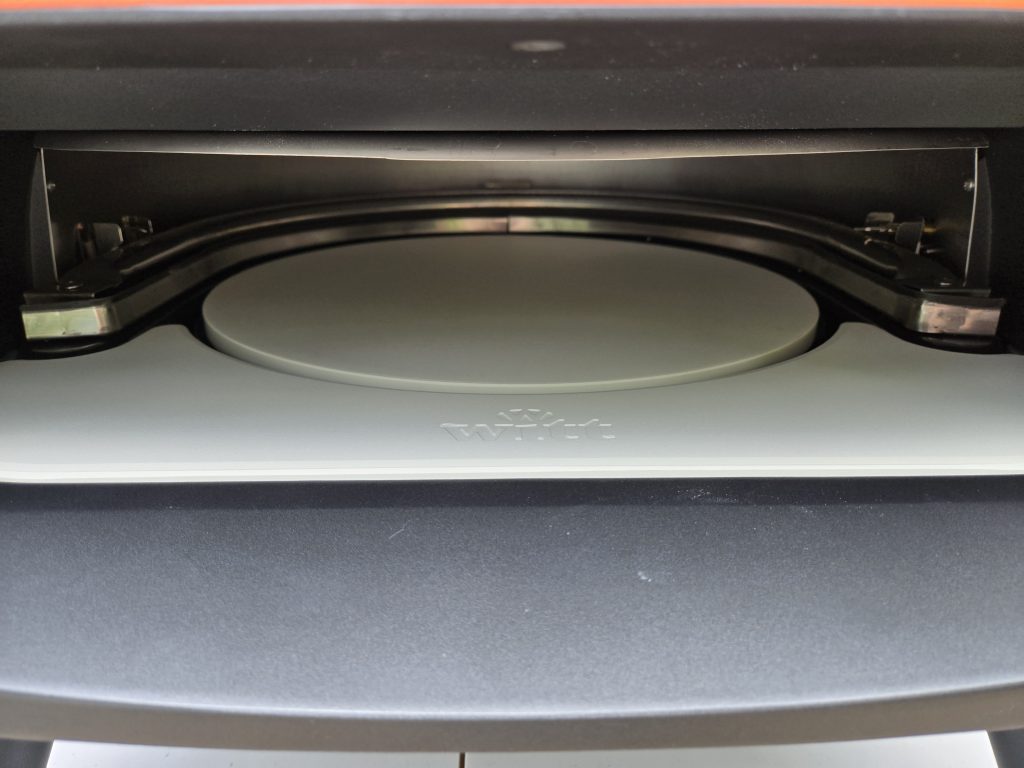
Technically speaking, set-up is straightforward: The oven comes fully assembled, and simply requires that you insert the pizza stone and front stone, put five AA batteries in place, and connect it to the gas.
The reality is somewhat more complicated, mostly due to the size and weight of the oven. The first issue is the battery compartments, which you’ll need if you don’t have an electrical outlet handy. Both compartments (you need one battery for the igniter, and four for the stone) are housed securely underneath the oven. This means that to get to them, you either have to turn the thing onto its domed top, where you risk scratching it as it rocks back and forth, or have someone else hold it up for you while you do it.
The second option is preferable, but made more difficult by the fact that the oven’s legs are collapsible. Any time you want to significantly adjust the oven’s position or, in this case, tip it back to get to the battery compartment, the weight causes the legs to fold themselves away, requiring frantic scrabbling to pop them back out.
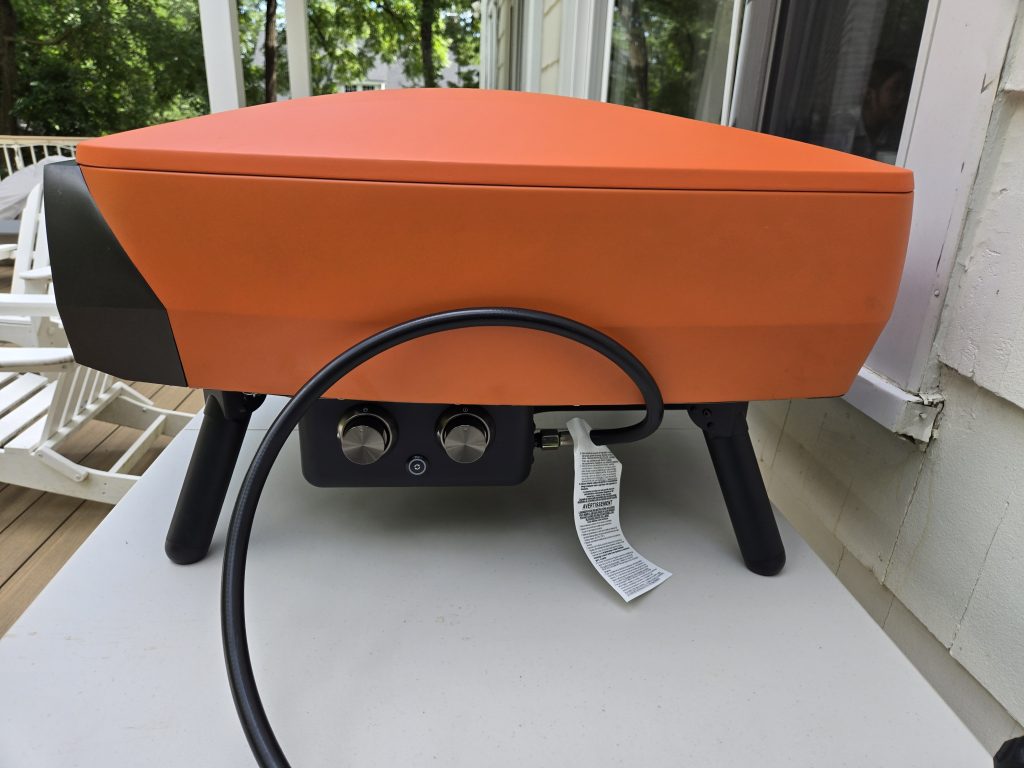
Why the legs are collapsible is a bit of a mystery. It was done, presumably, in the name of portability, but considering the size and weight of this oven, it’s unlikely you’re going to want to move it around any more than you absolutely have to, and even then, popping its stubby legs in doesn’t help with much of anything.
Once all this was done, though, the rest was indeed easy. With the stone in place and the gas connected, the oven lit first time, and it began pre-heating.
The Experience
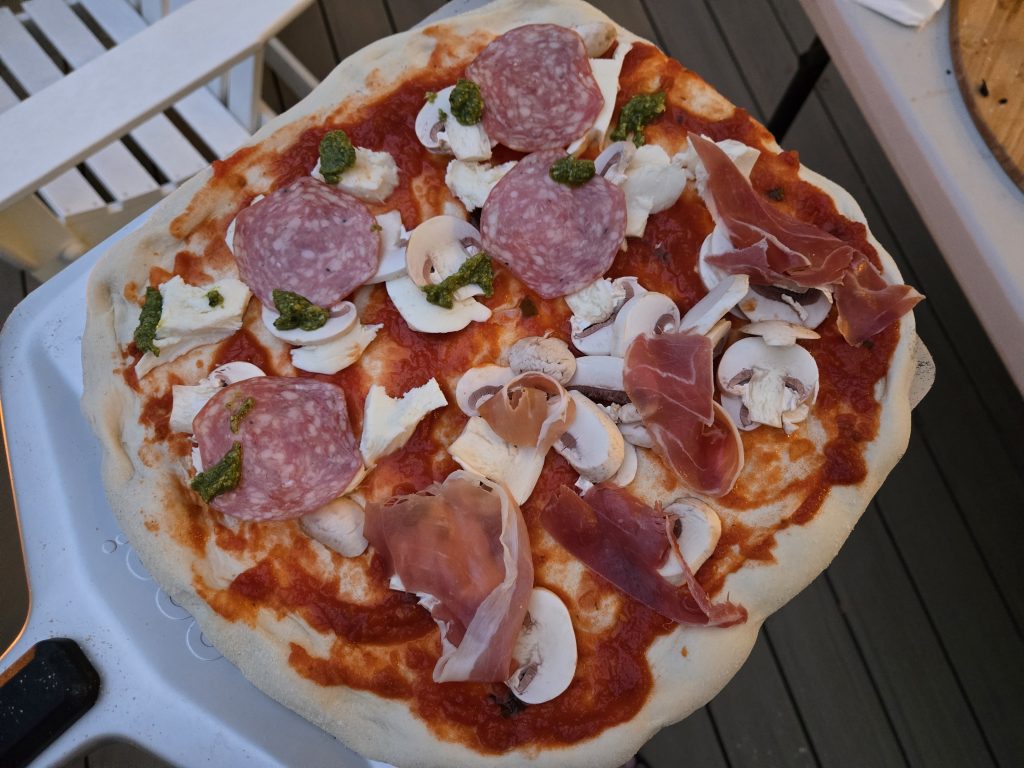
Once the burners are on, the oven takes around 15 minutes to heat up sufficiently. Two small issues here: Firstly, because the booster burner is situated under the middle of the pizza stone, it’s near impossible to tell whether or not it’s lit without lifting the stone up to see underneath. Second, there’s no built-in temperature gauge, so if you’re trying to hit a really specific heat for your pizza, you’ll need a separate thermometer.
When you’ve figured this stuff out, though, the rest is plain sailing. You slide your pizza into the oven’s gaping maw, watch it rotate and sizzle for a minute or so, then pull it out again (quick note, you will definitely need to invest in a pizza peel).
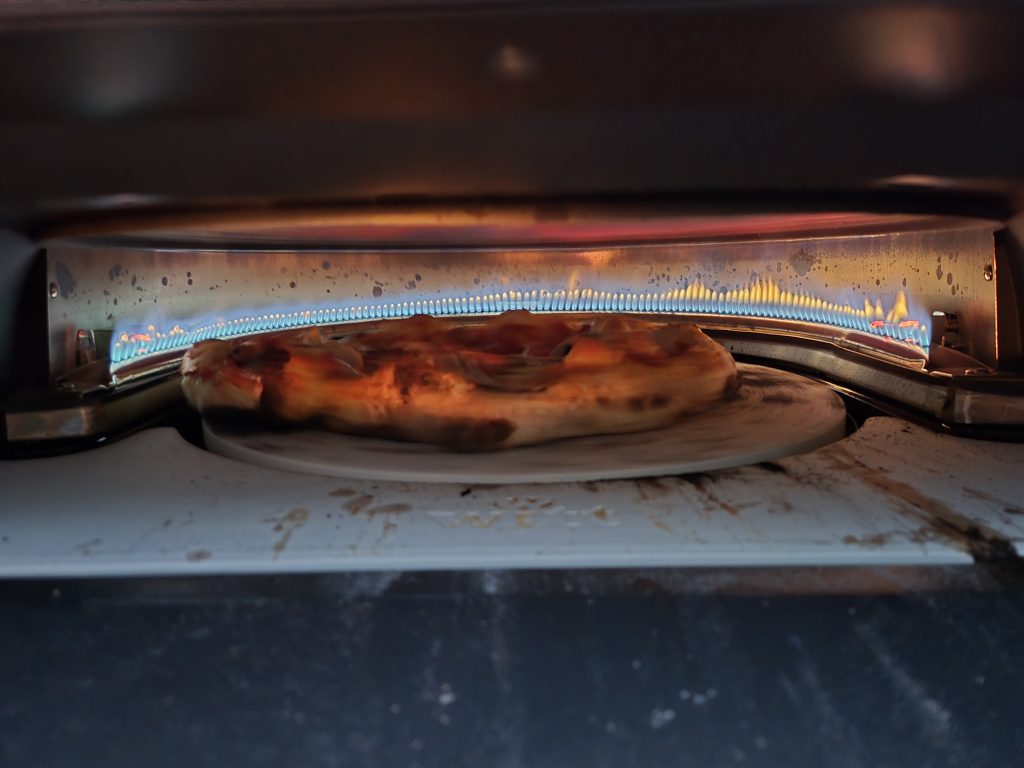
The main appeal of the oven is, of course, the rotating pizza stone, which ensures even cooking and no manual turning of the pizza. This all works perfectly, with every pizza I made coming out uniformly cooked and crispy on its edges. There’s a little trial and error in getting the middle of the pizza to cook at the same speed as the outside, but I got the hang of it fairly quickly. The first couple of pizzas came out a little blackened on the sides while still being a bit soft in the middle, but by turning the U-burner down to medium as soon as the pizza went in, and keeping the booster burner on max, the problem was solved. You may still find a soggy middle if you overload your toppings, but at that point, I’m willing to call it user error rather than a design flaw.
Once I had the settings down, I found a little under two minutes to be the sweet spot for cooking time. With fresh, room-temperature dough bought from our local pizzeria (my attempts at making my own dough have ranged from unsuccessful to disastrous), the pizzas that come out of the oven are astonishingly good. I’ve forced pizza slices on multiple friends and neighbors at this point, and the result is always wide-eyed appreciation, followed by a request for more. I’d always thought that a pizza oven couldn’t really make pizza taste that much better than a regular oven, but I was very, very wrong.

So far we’ve made all kinds of regular pizzas, as well as cheeseless pizzas for the vegans, and dessert pizzas for the kids, and everything has come out great (actually, the marshmallows caught fire pretty spectacularly on the dessert pizza, but somehow still tasted good). We’re thinking about trying to make naan bread on it next. I have no idea if that’ll work, but I’m excited to try.
Witt Etna Rotante Pizza Oven
The End Result
Despite starting out as a pizza oven skeptic, the Witt Etna Rotante Pizza Oven has now become a central part of my family hangouts. It’s big, it’s heavy, it’s expensive, and I still don’t understand the collapsible legs, but the pizza it makes is so good that it’s quite possibly ruined me for life. I’ve never been snobby about pizza — I’m as happy with a dollar slice as anyone — but after this experience, I’m going to be thinking twice about ordering it from anywhere else when I’ve got this at home.
Do you need a pizza oven in your back yard? Probably not. Will you wonder how you lived without one after trying this? Almost certainly.
